A UK Player's Guide to Off-Season Baseball & Softball Training
With this year's baseball and softball season pretty much wrapped up, it's easy to let the kit sit in the bag over winter while your mind's on other things, even though you're already counting down to spring.
But do you want to be one of those players who spends the first few weeks of next season warming back up? Or do you want to come back sharp and ready to go? This guide covers how to actually do that, plus a few things that are genuinely different for players training in the UK rather than the US.
CONTENTS
Why off-season training matters
Conditioning gaps between seasons are often linked to a higher risk of early-season injuries, particularly for pitchers and throwers, since arm strength fades faster than most people expect. This isn't about scaring anyone into a winter bootcamp. It's the opposite. A bit of regular, consistent training over the off-season means you're not the one huffing to keep up with your kid's new bike — stabilisers apparently no match for their speed.
You don't want to be trying to get game-ready within a couple of weeks once the season's back and there are games in the calendar.
The good news: twenty minutes, a few times a week, is enough to keep your body and your swing exactly where you left them in 2026, ready for 2027.
The four training pillars
Core strength & rotational power
Bat speed and throwing power both come from the hips and core, not the arms. This is the highest-value place to spend time in the off-season. Planks, Russian twists, and medicine ball rotational throws are simple, need almost no space, and build exactly the rotational strength you'll rely on.
Speed & agility
A stolen base or a beaten throw often comes down to fractions of a second, and that's easy to stay on top of without practice games. Ladder drills and cone drills, even improvised with jumpers or cones in a garden or park, keep footwork and acceleration sharp through winter.
Arm care & throwing mechanics
Skipping this is a common cause of spring injuries. Resistance band work for the shoulder, and a gradual, controlled build-up of throwing distance (rather than going straight back to full long-toss), keeps the arm warm and ready without overdoing it.
Worth having: the Rawlings ResistBaseball resistance band for shoulder work, and the Markwort synthetic-cover weighted baseballs (set of 6) to build arm strength gradually and safely. Weighted-ball work is best suited to older, more experienced players, and ideally done under a coach's guidance rather than picked up cold.
A note for softball players
Off-season conditioning isn't identical across both sports. Fastpitch's windmill pitching motion puts strain on different muscles to a baseball overarm throw, so if you pitch fastpitch, it's worth working with your coach on windmill-specific arm and shoulder care rather than assuming baseball drills cover it.
Everything else in this guide — core, speed, hitting — applies just as much to softball. For at-home hitting and drill work, the Worth Hot Dot leather softball and the Rawlings FP12S soft training softball are both good options to have in the bag.
Hitting mechanics maintenance
Muscle memory fades faster than people think (depending on your age). Regular tee work, soft toss, or even dry swings in front of a mirror keep timing and mechanics from drifting over a few months off, and stop you returning to the plate rusty and confused. None of this needs a field. A garden, garage, or even a hallway is enough.
The Markwort strike zone pad is a genuinely useful bit of kit for both ends of this: lay it flat in front of a net for pitchers to throw into at standard distance and track their entry point, or set a batting tee over different parts of the pad to work inside, middle, and outside pitches. It's heavy vinyl and lies flat, so it won't slide around on garage concrete or a gym floor. Pair it with a Markwort adjustable batting tee for tee work. If you'd rather have something light enough to carry to the park, the Rawlings lightweight batting tee is worth a look.
Rule of thumb: 2–3 sessions a week, 20–25 minutes each, is plenty. This is maintenance, not a training camp, and it needs to last the whole of a, potentially, bleak British winter.
Your gear needs the off-season too
Training isn't just about you. Your kit needs off-season care too.
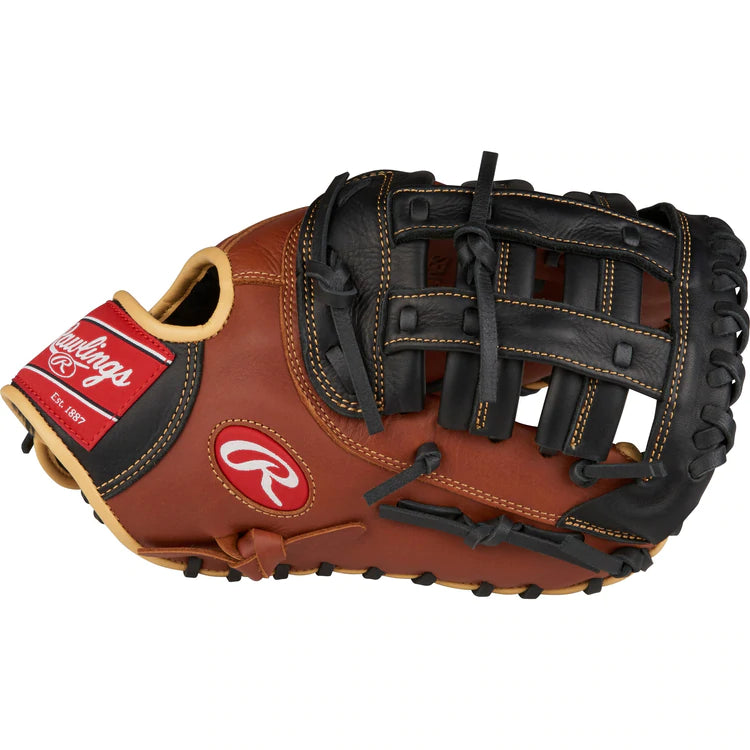
Gloves: clean off any dirt, apply a leather conditioner, and store with a ball inside to keep the pocket's shape. Keep it somewhere cool and dry and never near a radiator or left outside. Rawlings Gold Glove Butter is the one to reach for. One of our most reviewed products, and for good reason — "Great customer service. Top product for your glove. Highly recommended."
If you're storing your glove for any real length of time, a Rawlings glove crib will keep it wrapped and holding its shape, rather than flattening out loose in a bag over winter. The Rawlings glove wrap is a simpler alternative for keeping a ball tucked in the pocket.
Bats: wood and composite/alloy bats have different storage needs. Composite bats can crack if they're used while cold, so it's worth checking the manufacturer's temperature guidance before taking one out on a frosty morning rather than finding out the hard way. Wood bats are more temperature-sensitive still and are best kept somewhere dry, at a steady temperature, rather than somewhere that swings from a cold garage to a warm house and back. Either way, check for hairline cracks before the first swing of spring rather than after.
Training in the UK: what's actually available
If you're near London, The 108 in Brent Cross is genuinely excellent — a full indoor facility with batting cages and bullpens, and by most accounts one of the largest indoor baseball and softball facilities in Europe.
For most players elsewhere in the UK, winter training is more likely to mean sharing nets with the local cricket lot, a sports hall booking, or simply working in a garage or driveway with the collar up. And that's completely fine. It's worth checking with your own club too, since a number of BSUK-affiliated clubs run informal winter sessions, with or without a dedicated indoor facility.
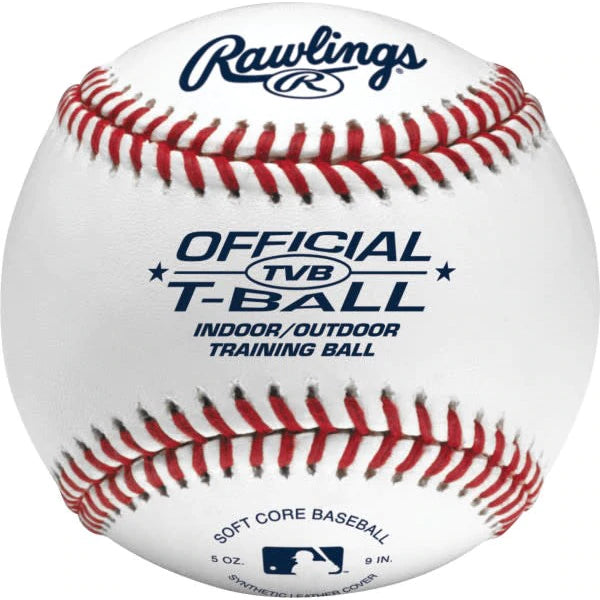
Whatever your setup, a softer ball makes indoor practice a lot more forgiving on walls, windows, children and siblings. The Rawlings Incrediball 9" is a genuine favourite for safety around kids: "This is great as an indoor/outdoor practice ball near places a harder ball would do damage. Good for safety when kids play." And for whole-family garden fun regardless of the drill, a Blitzball is always worth keeping in the bag. Wiffle balls, in both baseball (9") and softball (12") sizes, are another safe option indoors.
A simple at-home weekly routine
If you only take one thing from this article, take this:
| Day | Focus | Time |
|---|---|---|
| Monday | Core & mobility | 20 min |
| Wednesday | Speed & agility | 20 min |
| Friday | Tee work & arm care | 25 min |
| Weekend | Rest, or light throwing only | — |
Stick with something like this through winter, so spring won't feel like starting from scratch.